
Affiliate Disclosure: Compact Conqueror earns a small commission on qualifying purchases through links on this page — at no extra cost to you. We only recommend gear we have tested or our community has verified. See our affiliate disclosure.
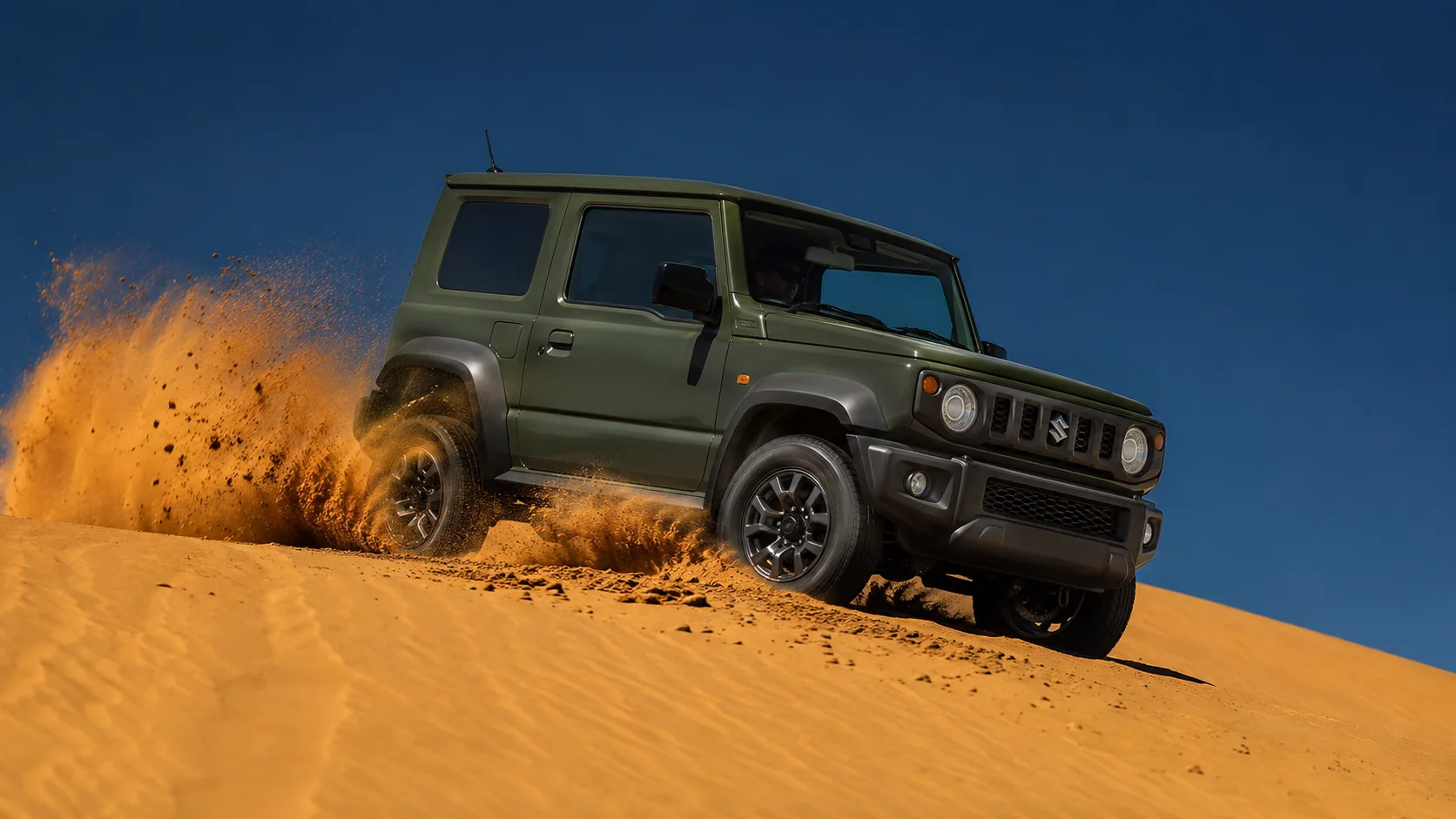
Sand is the great equaliser — and the Jimny’s light weight makes it a natural. From the beaches of the West Coast to the dunes of the Kalahari, sand driving is about floatation, momentum, and the single most important rule in off-roading: air down. Get the pressures right and the Jimny dances across sand that strands heavier vehicles.
Why the Jimny Loves Sand
Sand performance comes down to flotation — staying on top of the sand rather than digging into it. Two things govern flotation: weight (less is better) and contact patch (bigger is better). The Jimny’s light weight is a huge advantage, and airing down dramatically increases its contact patch. The combination lets the Jimny float across soft sand where heavier 4x4s dig in and bog.
In sand, tyre pressure is everything. The difference between sailing across a dune and digging to the axles is often just half a bar.
Marcus Roux, Compact Conqueror
Airing Down — The Golden Rule
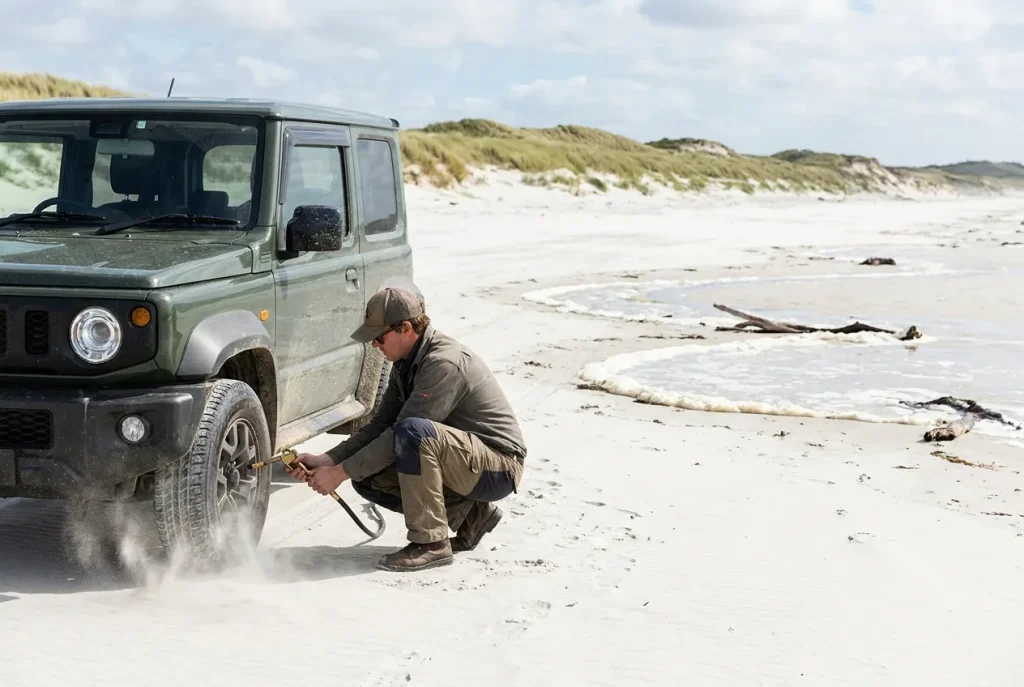
Nothing improves sand performance like lowering tyre pressure. A lower pressure flattens and lengthens the tyre’s contact patch, spreading the vehicle’s weight over more sand and dramatically improving flotation. This is the single most important sand-driving technique.
| Sand Condition | Recommended Pressure | Notes |
|---|---|---|
| Firm beach / compacted track | 1.2 bar | A modest reduction is enough |
| Soft sand | 1.0–1.1 bar | Larger contact patch for flotation |
| Very soft / deep dune sand | 0.8–1.0 bar | Maximum float — drive gently, re-inflate ASAP after |
⚠ Lower pressures, lower speeds, and re-inflate promptly
At very low pressures the tyre can roll off the rim (de-bead), especially in hard cornering or at speed. Drive gently and avoid sharp turns at low pressure. Re-inflate to road pressure before returning to firm surfaces or tar — a 12V compressor is essential sand-driving kit.
Sand Driving Technique
- Air down first — before you enter the soft stuff, not after you’re bogged in it
- Select 4H for most sand (4L for very steep dunes or technical situations). High range lets you carry the momentum sand demands
- Maintain momentum. Sand robs energy constantly — keep a steady, moderate speed. Momentum carries you through soft patches that would bog a slow or stationary vehicle
- Be smooth. Gentle throttle, gentle steering. Sudden inputs break traction and dig you in. Think “float,” not “fight”
- Avoid stopping in soft sand. If you must stop, do so on firmer ground or facing downhill so you can get moving again. Pulling away from a standstill in soft sand is how you bog
- Follow existing tracks where they exist — the sand is more compacted there. But beware tracks leading into trouble
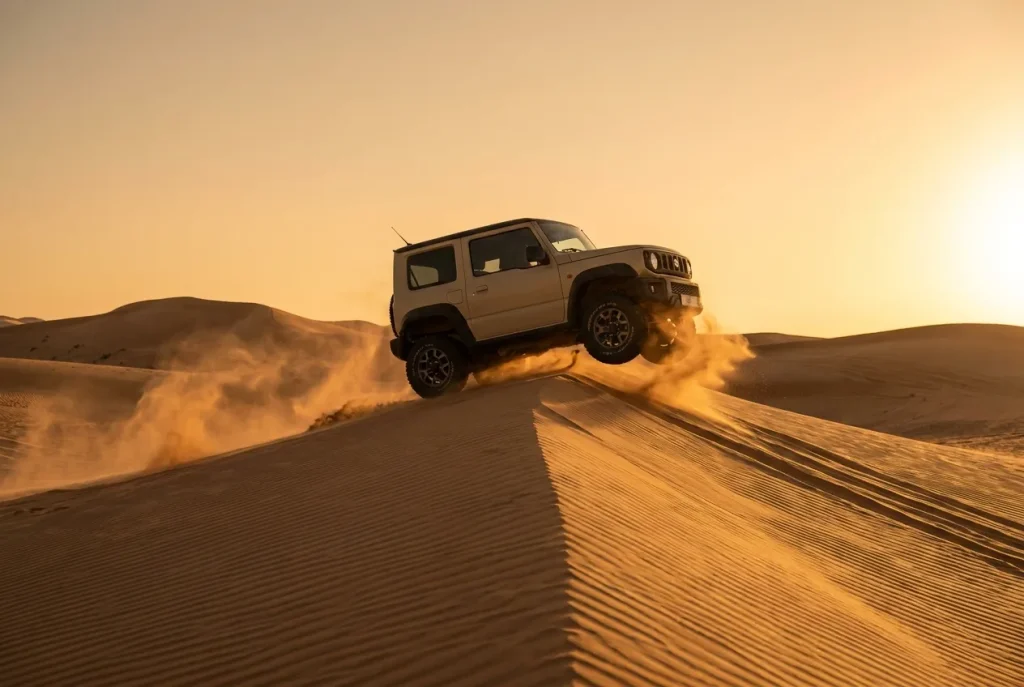
- On dunes, approach straight on and read the crest. Never crest a dune at speed without knowing what’s on the other side — a sharp drop (a “slip face”) can be dangerous. Crest slowly, perpendicular to the ridge
If You Get Bogged in Sand

- Stop spinning immediately — spinning wheels dig you in fast in sand
- Air down further if you have margin (the bog itself shows your pressure was too high)
- Clear sand from in front of (or behind) the tyres with a shovel, and from under the chassis if it’s high-centred
- Use recovery boards — sand is exactly what they’re designed for. Wedge them under the driven wheels and drive out gently
- Reverse out along your tracks if forward won’t go — the compacted tracks behind you offer more grip
See our recovery gear guide — recovery boards and a compressor are the core sand-recovery kit.
Beach Driving — Extra Considerations
Beaches add tides and salt. Drive on the firmer wet sand below the high-tide line where permitted, but watch the tide so you’re not cut off. Salt water and sand are highly corrosive — rinse the underbody thoroughly with fresh water after beach driving to protect against rust. Check local regulations: many beaches restrict or prohibit vehicle access, and permits are often required.
Frequently Asked Questions
Is the Suzuki Jimny good in sand?
Yes — its light weight makes it a natural. Sand performance is about flotation, governed by weight (less is better) and contact patch (bigger is better). The lightweight Jimny, with tyres aired down for a bigger contact patch, floats across soft sand that bogs heavier 4x4s. Tyre pressure and momentum matter far more than power.
What tyre pressure for sand driving in a Jimny?
Around 1.2 bar for firm beach or compacted sand, 1.0–1.1 bar for soft sand, and 0.8–1.0 bar for very soft deep dune sand. Lower pressure flattens the contact patch for flotation. Drive gently at low pressures to avoid rolling the tyre off the rim, and re-inflate to road pressure before returning to firm ground — carry a 12V compressor.
Should I use 4H or 4L for sand?
Use 4H (high range) for most sand driving — it lets you carry the momentum sand demands. Switch to 4L (low range) only for very steep dunes or technical low-speed situations. The key in sand is maintaining steady momentum, which high range supports better than the deep gearing of low range.
How do I get my Jimny unstuck from sand?
Stop spinning the wheels immediately — spinning digs you in fast. Air down further if you have margin, clear sand from in front of the tyres and under the chassis with a shovel, and use recovery boards under the driven wheels to regain traction. Reversing out along your compacted entry tracks often works when forward won’t. Recovery boards are the essential sand-recovery tool.
Can I crest a sand dune at speed in a Jimny?
No — never crest a dune at speed without knowing what is on the other side. A sharp drop or slip face beyond the crest can be dangerous or roll the vehicle. Approach dunes straight on (perpendicular to the ridge), and crest slowly so you can see and react to what lies beyond. Reading the dune is a core dune-driving skill.
How do I protect my Jimny after beach driving?
Salt water and sand are highly corrosive. Rinse the entire underbody thoroughly with fresh water after beach driving to prevent accelerated rust, paying attention to the chassis, brakes and suspension. Re-inflate your tyres to road pressure. Also check local regulations before beach driving — many beaches restrict vehicle access and require permits.
Trail conditions, access rules, permit requirements and seasonal closures change frequently and without notice. This guide is general information, not a substitute for current local advice. Always check conditions with local authorities or guides, travel prepared and within your abilities, and never drive a trail alone if you can avoid it.
Related Reading
Free Newsletter
The Compact Conqueror Newsletter
Trail reports, technique guides, mod picks and Jimny news — free, every week.
Free Jimny Tool
Working out your Jimny’s tyre size?
Check fitment, overall diameter, speedo error and clearance for any tyre size — before you buy or lift.