
Affiliate Disclosure: Compact Conqueror earns a small commission on qualifying purchases through links on this page — at no extra cost to you. We only recommend gear we have tested or our community has verified. See our affiliate disclosure.
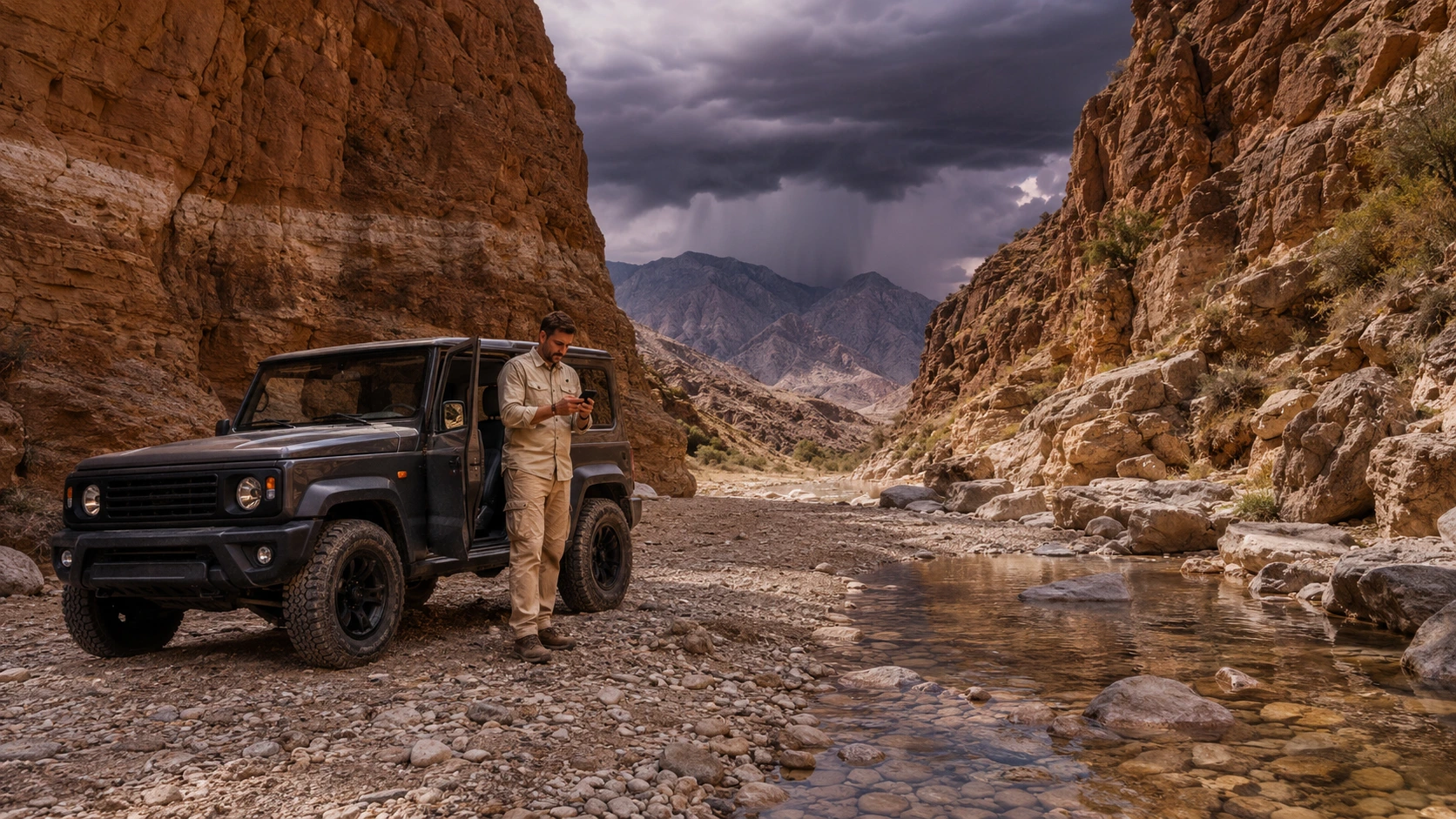
The UAE and Oman offer some of the most dramatic off-road terrain on earth: towering red dunes, and the rugged Hajar Mountains carved by wadis — dry (or not-so-dry) riverbeds that wind through spectacular gorges. “Wadi bashing” is the regional term for exploring them, and the compact, capable Jimny is a popular choice. This researched overview covers the terrain, the technique, and the critical safety considerations.
Wadis and Dunes: The Two Faces of Arabian Off-Roading
Off-roading in the UAE and Oman broadly splits into two very different environments. The deserts — the dunes of Liwa, the Empty Quarter, and recreational areas closer to the cities — are about sand technique and dune driving. The Hajar Mountains, straddling the UAE-Oman border and extending through northern Oman, are about wadis: rocky watercourses winding through steep gorges, ranging from gentle gravel tracks to serious rock obstacles.
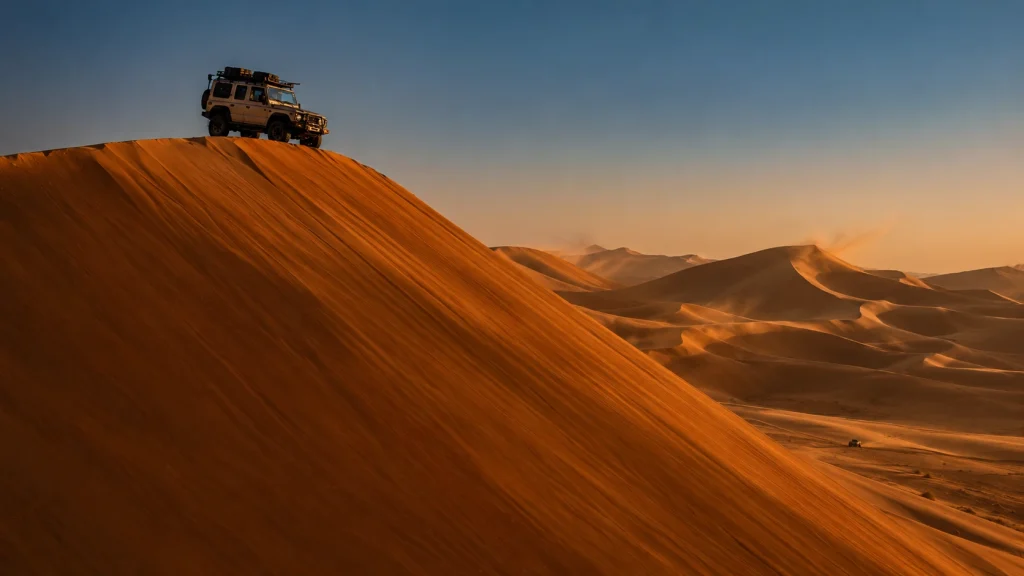
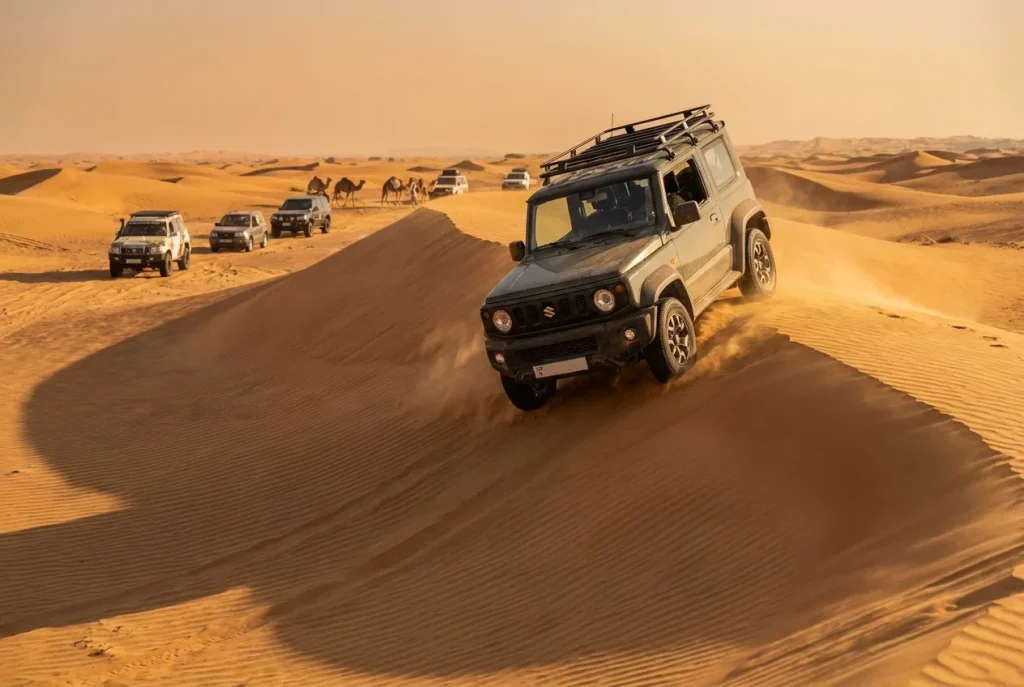
The Jimny suits both. Its light weight excels in the dunes (see our sand technique), while its compact size and articulation make it ideal for the tight, rocky confines of wadi tracks.
A wadi can be a gentle gravel meander or a serious rock gorge — and a dry one can become a torrent in minutes. Respect the terrain and the sky.
Compact Conqueror Editorial
Notable Regions & Routes
| Area | Type | Notes |
|---|---|---|
| Hajar Mountains (UAE/Oman) | Wadis & rock | The heart of regional wadi bashing — dramatic gorges |
| Wadi Bani Awf / Snake Gorge (Oman) | Challenging wadi & canyon | Famous, demanding route through the Western Hajar |
| Jebel Shams / Wadi Ghul (Oman) | Mountain & canyon | “Grand Canyon of Oman” — spectacular scenery |
| Hatta (UAE) | Mountain tracks & pools | Popular accessible mountain area near Dubai |
| Liwa / Empty Quarter (UAE) | Big dunes | Serious dune driving — the giant dunes of the south |
| Al Qudra / Al Faya (UAE) | Recreational dunes | Accessible desert near Dubai for dune practice |
Routes range from accessible family-friendly tracks to serious expeditions requiring experience, recovery capability and local knowledge. Many of the best routes — particularly in Oman’s mountains — are remote and demanding. Research each route’s difficulty and current status, and consider going with experienced local groups for the harder routes.
The Two Critical Safety Issues
⚠ Flash floods — the deadliest wadi danger
A wadi is a watercourse. Rain falling many kilometres away — even out of sight, even when it is sunny where you are — can send a flash flood roaring down a wadi with terrifying speed and force. Flash floods kill in the region every year. Never enter a wadi when rain is forecast or has fallen anywhere in the catchment, never camp in the bottom of a wadi, and if water starts rising, get to high ground immediately. Check the weather forecast before any wadi trip.
⚠ Extreme heat
Summer temperatures in the region regularly exceed 45°C. Heat is a genuine, life-threatening hazard. Carry far more water than you think you need (for the vehicle and occupants), avoid mid-summer mid-day driving, ensure your cooling system is in good order, and never travel into remote desert or mountains alone or without telling someone your plans.
Preparation for Wadi & Desert
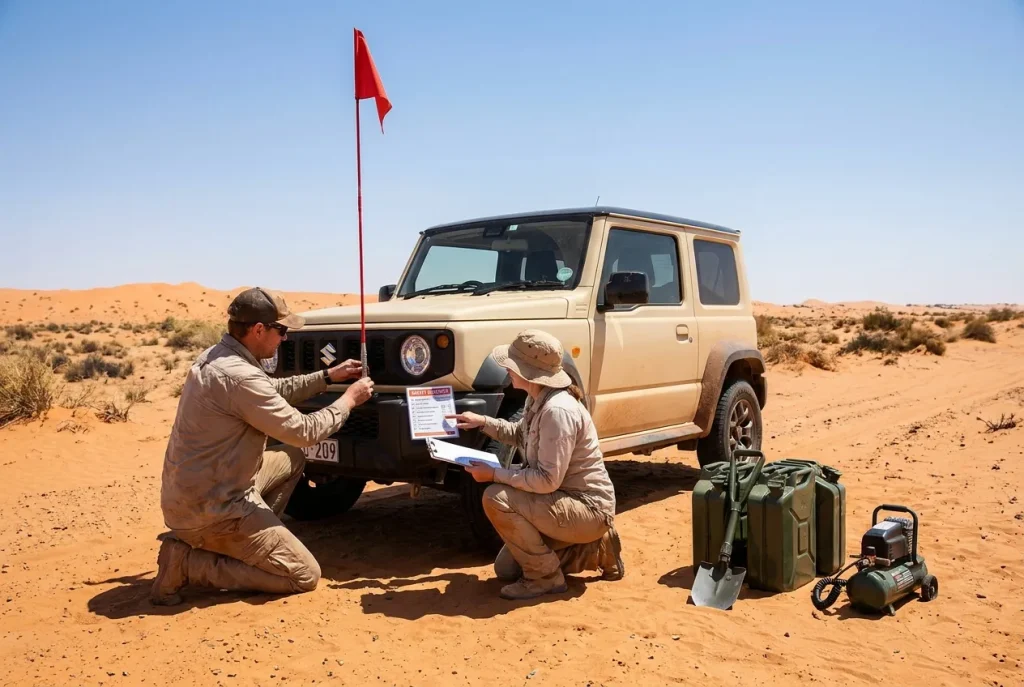
- Check the weather thoroughly — for the whole catchment, not just where you are. Flash flood risk is the number one wadi danger
- Carry abundant water — for occupants and the vehicle. Heat is a serious hazard
- Travel in convoy — remote desert and mountains are unforgiving alone; a second vehicle is a lifeline
- Carry full recovery gear — recovery boards for sand, plus the broader kit for rock and remote situations
- Fit good tyres and manage pressures — air down for dunes, manage pressure for rock; carry a compressor
- Carry communications and navigation — a satellite messenger for remote areas where there is no mobile coverage
- Respect local rules and culture — confirm any permits, access rules and cross-border requirements (the UAE-Oman border) before travelling
A well-prepared Weekend Warrior or overland-spec Jimny with recovery gear, good tyres, a compressor and communications is well suited to the region. See our overland build and recovery gear guides.
Frequently Asked Questions
Is the Suzuki Jimny good for wadi bashing?
Yes — its compact size and articulation make it ideal for the tight, rocky confines of wadi tracks in the Hajar Mountains, while its light weight excels in the dunes. The Jimny is a popular choice in the UAE and Oman for exactly these reasons. As always, preparation, good tyres, recovery capability and respect for the terrain matter more than the vehicle itself.
What is wadi bashing?
“Wadi bashing” is the regional term for off-road exploring of wadis — dry (or seasonally flowing) riverbeds and watercourses that wind through the mountains and gorges of the UAE and Oman. Routes range from gentle gravel tracks to serious rock obstacles in dramatic canyons. It is one of the two main forms of off-roading in the region, alongside dune driving in the deserts.
What is the biggest danger when driving wadis?
Flash floods. A wadi is a watercourse, and rain falling many kilometres away — even when it is sunny where you are — can send a flash flood roaring down it with deadly speed and force. Flash floods kill in the region every year. Never enter a wadi when rain is forecast anywhere in the catchment, never camp in a wadi bottom, and move to high ground immediately if water rises.
Do I need a 4×4 for the UAE and Oman mountains and deserts?
Yes. Both the dunes and the rocky wadi tracks require genuine 4WD with low range, good tyres and the ability to manage tyre pressures. The terrain ranges from soft sand requiring flotation to rocky obstacles requiring clearance and articulation. The Jimny’s 4WD hardware suits both, but a 4×4 and proper preparation are essential.
How hot does it get and does it matter for off-roading?
Summer temperatures regularly exceed 45°C, and heat is a life-threatening hazard, not just a discomfort. Carry far more water than you expect to need, avoid mid-day mid-summer driving, ensure your vehicle’s cooling system is sound, and never travel into remote areas alone. Heat exhaustion and a vehicle breakdown in the desert is a genuinely dangerous combination.
Should I drive UAE and Oman off-road routes alone?
No — especially the remote desert and mountain routes. The combination of extreme heat, remote terrain with no mobile coverage, and hazards like flash floods makes solo travel dangerous. Travel in convoy with a second vehicle, carry a satellite messenger, tell someone your route and expected return, and consider joining experienced local groups for harder routes.
Trail conditions, access rules, permit requirements and seasonal closures change frequently and without notice. This guide is general information, not a substitute for current local advice. Always check conditions with local authorities or guides, travel prepared and within your abilities, and never drive a trail alone if you can avoid it.
Related Reading
Free Newsletter
The Compact Conqueror Newsletter
Trail reports, technique guides, mod picks and Jimny news — free, every week.
Free Jimny Tool
Working out your Jimny’s tyre size?
Check fitment, overall diameter, speedo error and clearance for any tyre size — before you buy or lift.