
Affiliate Disclosure: Compact Conqueror earns a small commission on qualifying purchases through links on this page — at no extra cost to you. We only recommend gear we have tested or our community has verified. See our affiliate disclosure.
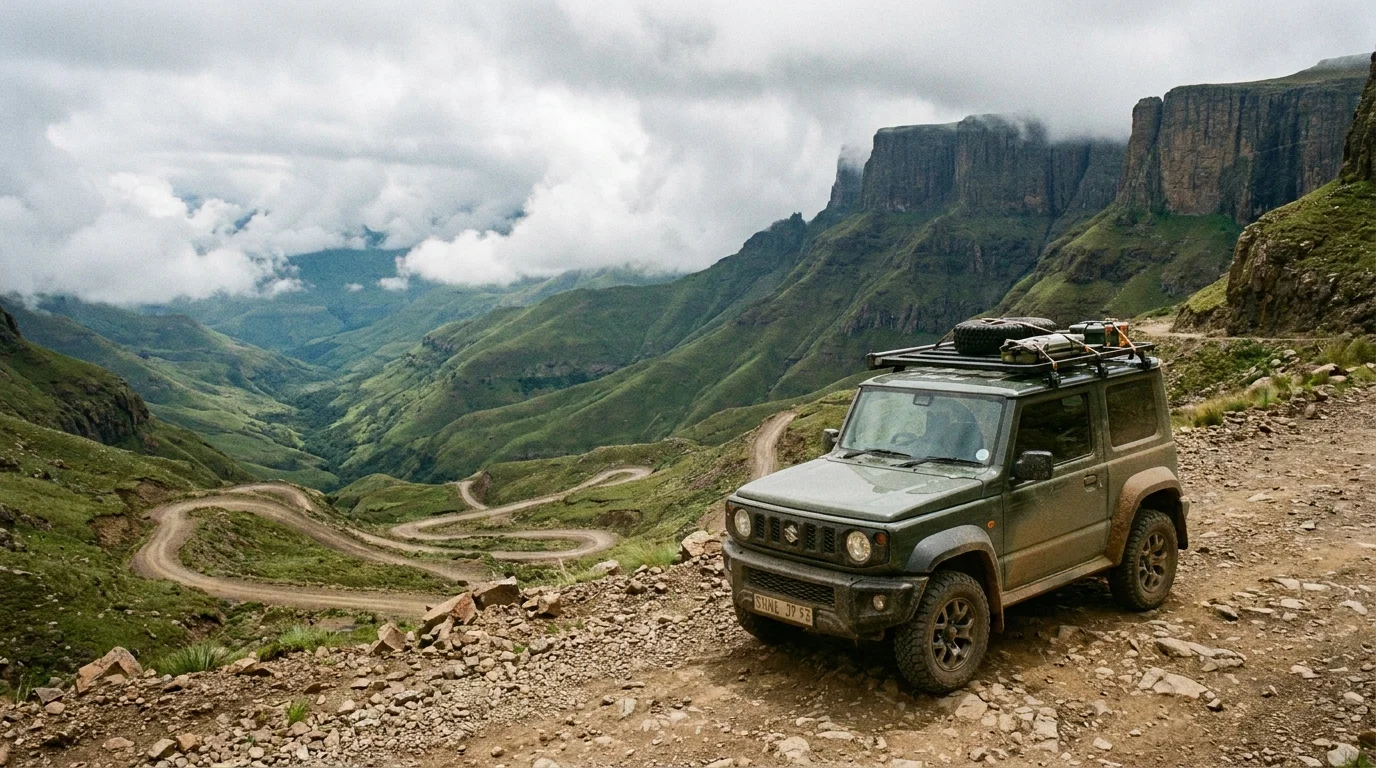
Sani Pass is the most iconic 4×4 route in South Africa — a heart-stopping climb of hairpin bends from the foothills of the southern Drakensberg to the Lesotho border at around 2,876 metres, the gateway to the Roof of Africa. And there’s an urgent reason to drive it: the lower sections have been tarred, and the famous steep 4×4 section is next. Drive it while it’s still a genuine 4×4 challenge.
Drive It Before It’s Tarred
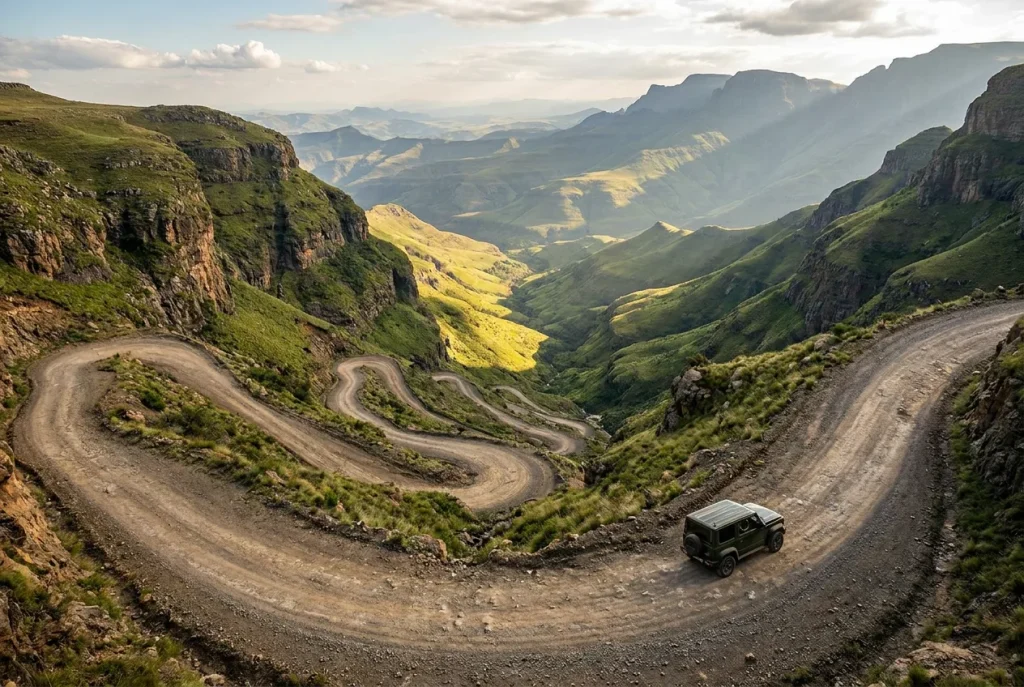
The Sani Pass is changing. The tarring of the route has been progressing in phases: the lower and middle sections (Phase 2) were completed by 2022, with tar now reaching up to the South African border control point. The final phase — the serious 4×4 section that climbs over 900 metres in just 8 kilometres of hairpins — remains gravel for now, but the provincial transport authorities have indicated work on this section is expected to commence around 2025–2026.
In practice, that means the steep upper section is still a genuine gravel 4×4-only route as of 2026 — but its days in that form are numbered. Once the final phase is tarred, the challenge and allure of Sani will shift from a demanding 4×4 adventure to a scenic drive achievable in an ordinary car. For Jimny owners who want to tackle one of the world’s great mountain passes as a true off-road route, the message is clear: don’t wait.
The Sani is still a real 4×4 climb — for now. The tar is coming for the steep section. If it’s on your list, move it to the top.
Marcus Roux, Compact Conqueror
Sani Pass at a Glance
| Detail | Information |
|---|---|
| Location | KwaZulu-Natal (SA) / Lesotho border, southern Drakensberg |
| Summit altitude | Approximately 2,876 m above sea level |
| The serious section | Climbs over 900 m in ~8 km of hairpins (still gravel as of 2026) |
| Difficulty | Demanding — steep gradients, hairpins, exposure; 4×4 required on the steep section |
| Vehicle | 4×4 with low range required for the steep section (SA immigration screens vehicles) |
| Border / documents | Passport required — it is an international border crossing |
| Lesotho road tax | Approximately R30 for light vehicles (under 2,000 kg) |
| Daily closing | The pass typically closes around 6pm |
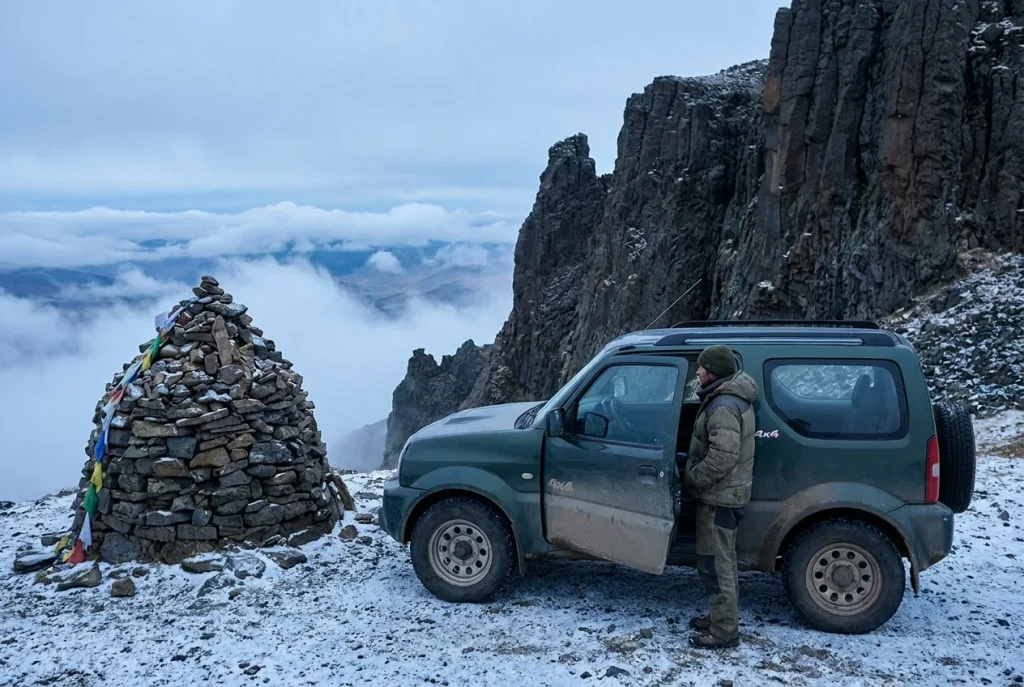
| Winter | Often closed in winter (roughly May–July) in bad weather and snow |
Is the Jimny Suitable for Sani Pass?
Yes — a sound, well-prepared Jimny is well suited to Sani Pass. The pass demands ground clearance, low-range 4WD, and good tyres rather than outright power, and the Jimny’s light weight and genuine off-road hardware handle the climb confidently. A Weekend Warrior-spec Jimny (40 mm lift, all-terrain tyres, skid plates) is more than capable. Even a well-maintained stock JB74 on all-terrain tyres handles it in good conditions.
What matters far more than the vehicle is preparation, conditions, and driving within your limits. The hairpins are steep and exposed, and the consequences of a mistake are serious — the ravines hold the wreckage of vehicles whose drivers got it wrong.
Preparing for Sani Pass
- Confirm your vehicle is mechanically sound — brakes, tyres, cooling and drivetrain in good order. The climb and descent both test the vehicle hard
- Carry your passport — it is an international border crossing into Lesotho
- Check the weather and road status before you go. Conditions change within hours; snow or heavy rain can close the pass
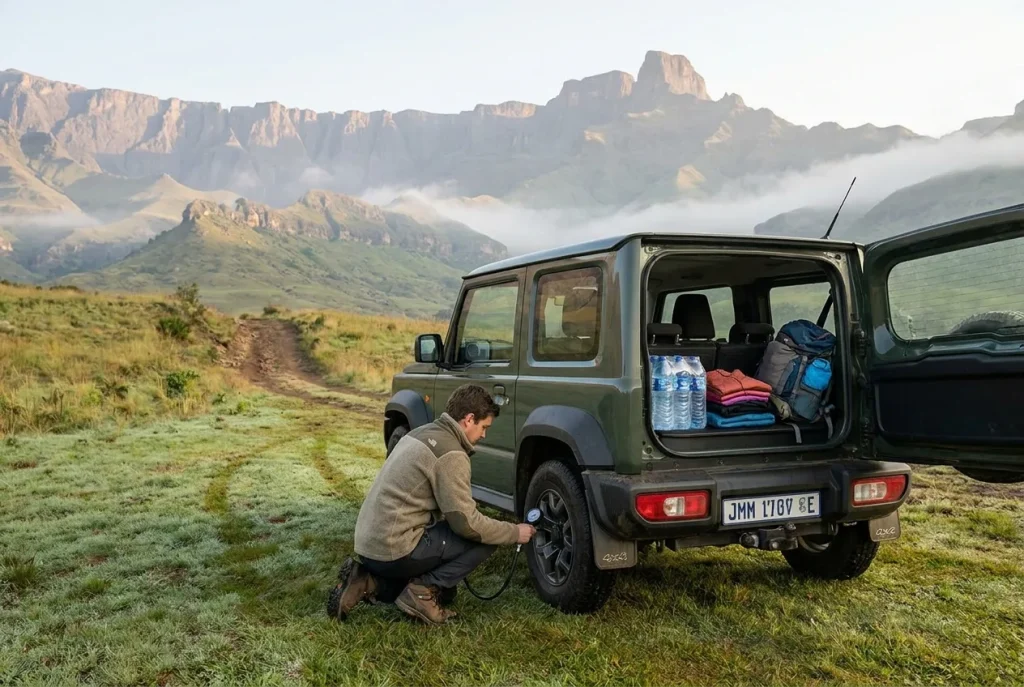
- Fit good tyres and know your pressures — all-terrains aired down slightly for the gravel improve grip and comfort
- Go early in the day — the pass closes around 6pm, and weather often deteriorates in the afternoon
- Carry recovery gear and basic supplies — water, warm clothing (it is cold at altitude even in summer), and a recovery kit
- Travel in convoy if you can — and tell someone your plans and expected return time
⚠ Respect the mountain and the weather
Sani Pass has claimed lives. The weather at altitude is notoriously changeable — “four seasons in one day” is a local truth. Never underestimate it. If conditions turn or a section feels beyond you, turn back. The pass will still be there another day. Drive within your abilities and the conditions, not your ego.
The Drive — What to Expect
From the South African side, the route eases you in with a long, gentle gradient through the foothills before the serious climbing begins past the SA border post. The final 8 kilometres to the summit are the famous part: a relentless series of tight, steep hairpins clinging to the mountainside, with sections as steep as roughly 1:4 and dramatic exposure. In low range, taking it slowly and deliberately, a capable Jimny climbs it confidently — but it commands respect and full concentration.
At the summit sit the Lesotho border post and the highest pub in Africa, with views back down the pass and out over the Drakensberg that reward every hairpin. The descent demands as much care as the climb — use engine braking in low range rather than riding the brakes down the steep hairpins.
Frequently Asked Questions
Can you drive a Suzuki Jimny up Sani Pass?
Yes — a sound, well-prepared Jimny is well suited to Sani Pass. The pass demands ground clearance, low-range 4WD and good tyres rather than outright power, which plays to the Jimny’s strengths. A Weekend Warrior-spec Jimny is more than capable, and a well-maintained stock JB74 on all-terrain tyres handles it in good conditions. Preparation, conditions and driving within your limits matter far more than the vehicle.
Is Sani Pass being tarred?
Yes, in phases. The lower and middle sections (Phase 2) were completed by 2022, with tar now reaching the South African border control point. The final phase — the steep 4×4 section that climbs over 900 m in about 8 km of hairpins — remains gravel as of 2026, but provincial authorities have indicated work on it is expected to commence around 2025–2026. The steep section is still a genuine 4×4 route for now, but not for much longer.
Do you need a 4×4 for Sani Pass?
For the steep upper section, yes — a 4×4 with low range is required, and South African immigration at the bottom screens vehicles for suitability. The Lesotho authorities are less strict and may allow ordinary vehicles to descend only. As more of the pass is tarred, the 4×4 requirement applies to a shrinking section, but the steep climb remains 4×4 territory as of 2026.
What do I need to drive Sani Pass?
A sound 4×4 with low range and good tyres, your passport (it is an international border crossing into Lesotho), Lesotho road tax (around R30 for light vehicles), recovery gear, water and warm clothing. Check the weather and road status before you go, start early (the pass closes around 6pm), and ideally travel in convoy. Confirm current border and document requirements before travelling.
When is the best time to drive Sani Pass?
The drier months generally offer the most reliable conditions. The pass is often closed in winter (roughly May–July) due to snow and bad weather, and the rainy season (around October–March) can leave the gravel washed away and muddy. Whenever you go, check the weather and road status beforehand — conditions change within hours, and the pass closes around 6pm daily.
Is Sani Pass dangerous?
It is a serious, demanding route that commands respect — it has claimed lives, and the ravines hold the wreckage of vehicles whose drivers misjudged it. The steep hairpins, exposure and changeable mountain weather all add risk. With a sound vehicle, good preparation, the right conditions and disciplined driving within your limits, a capable Jimny driver can tackle it safely. If conditions turn or a section feels beyond you, turn back.
Trail conditions, access rules, permit requirements and seasonal closures change frequently and without notice. This guide is general information, not a substitute for current local advice. Always check conditions with local authorities or guides, travel prepared and within your abilities, and never drive a trail alone if you can avoid it.
Related Reading
Free Newsletter
The Compact Conqueror Newsletter
Trail reports, technique guides, mod picks and Jimny news — free, every week.
Free Jimny Tool
Working out your Jimny’s tyre size?
Check fitment, overall diameter, speedo error and clearance for any tyre size — before you buy or lift.