

Buying & Ownership
Depreciation is the biggest cost of owning most new cars — bigger than fuel, insurance or servicing. The Suzuki Jimny breaks that rule so completely that independent data shows used examples averaging more than their original list price. Here’s what the numbers actually say, market by market, and whether it can last.
Short answer: yes, the Suzuki Jimny holds its worth — and by the standards of ordinary cars, it does something close to unprecedented. The longer answer is more interesting, because the strength of Jimny values varies by market, generation and body style, and because “my car went up in value” headlines can hide the mechanics of why. This guide sets out the data, the reasons behind it, and the honest caveats. Note the obvious disclaimer up front: this is market analysis, not financial advice — cars are for driving first.
The headline data: what independent sources show
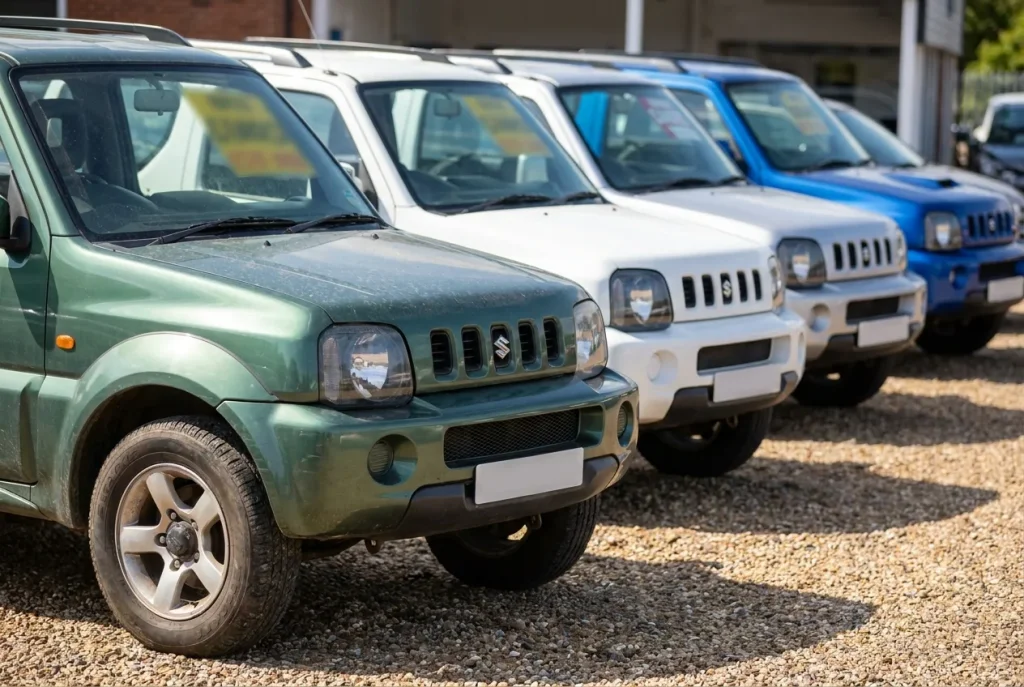

The most rigorous public dataset comes from Australia. According to the Automotive Insight Report compiled by the Australian Automotive Dealer Association (AADA) and pricing platform AutoGrab, the Jimny has held the number-one spot for retained value among Australian SUVs for over a year running — in both the 2–4-year-old and 5–7-year-old age brackets — with an average retained value of around 111% across both segments. Retained value above 100% means the average used Jimny sells for more than it cost new. AutoGrab first flagged the Jimny as the strongest residual performer in the entire Australian used market back in 2023, so this is a multi-year pattern, not a blip.
The UK tells the same story through a different lens. Because emissions rules ended passenger-car sales there after roughly two years, the Mk4 became scarce overnight. Autocar’s used buying guide describes the car as having modern-classic status, with classifieds spanning roughly £21,000 to £50,000 — figures that comfortably exceed the £15,499–£19,749 the cars cost new. Even the previous-generation Jimny was a residuals over-achiever: Auto Express recorded the old model retaining up to 53% after three years, exceptional for a budget car of its era.
| Market | Resale picture (fourth-gen JB74, 2026) | Primary driver |
|---|---|---|
| Australia | #1 SUV for retained value 12+ months running; ~111% average retained (AADA/AutoGrab) | Long waiting lists meeting cult demand |
| United Kingdom | Used cars trade above original list; ~£21k–£50k spread (Autocar) | Passenger sales ended 2020 — hard scarcity |
| South Africa | 600+ active listings roughly R70k (older gens) to R700k+ (modified/new 5-doors); late-model cars sit near new list | Strong 4×4 culture, steady new supply caps runaway pricing |
| India | Softest of the majors; early price cuts on the 5-door reset the curve, values now stabilising | Initial value perception vs rivals |
| Japan | Kei Jimny and Sierra both strong; Nomade demand (50k orders in 4 days) spills into used pricing | Multi-year factory backlogs |
Why the Jimny defies normal depreciation
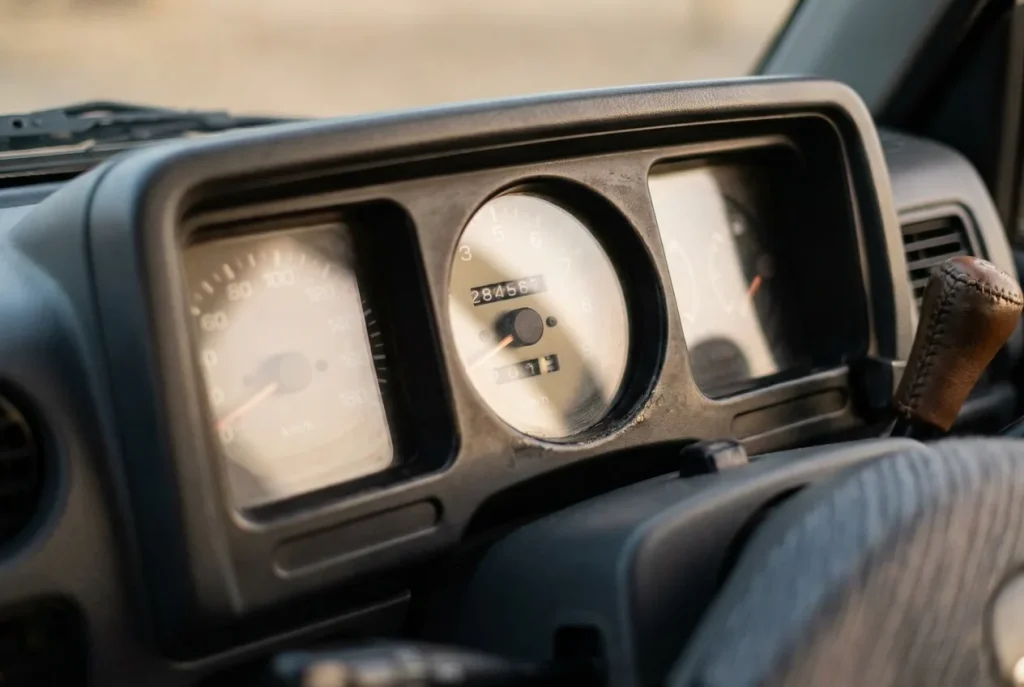
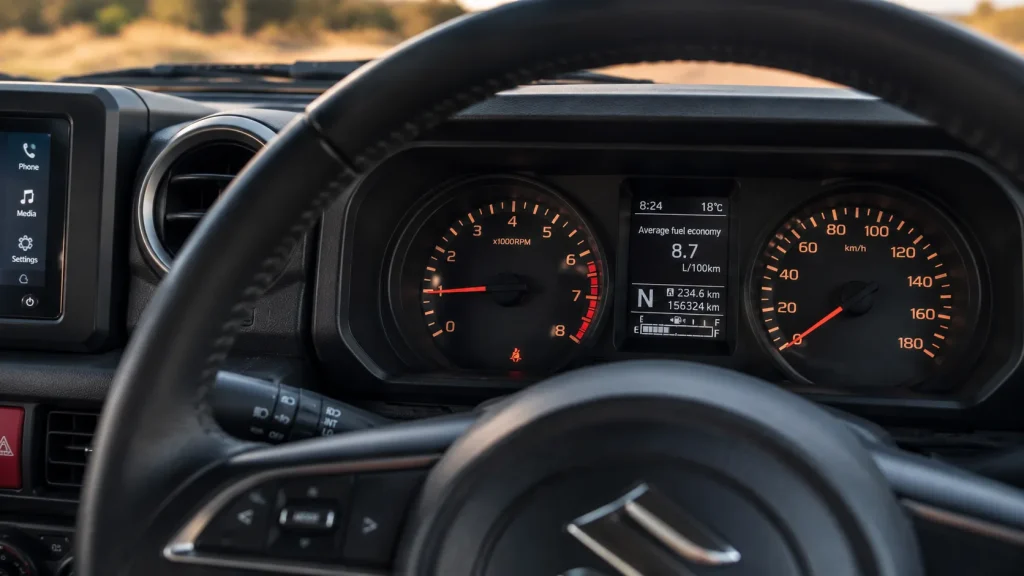
Supply has never caught demand. Since 2018, production constraints and multi-month (sometimes multi-year) waiting lists have pushed impatient buyers into the used market, where they bid against each other. When Suzuki opened Japanese order books for the five-door Nomade in January 2025, around 50,000 orders arrived in four days and orders were suspended. Scarcity like that flows straight into residuals.
It has no direct substitute. If you want a new ladder-frame, low-range 4×4 at this price and size, the alternatives list is essentially empty. Buyers who need what a Jimny does can’t cross-shop their way to a discount — a structural moat most cars simply don’t have.
The buyer pool is unusually deep. Off-roaders, urban drivers who love the size, first-car buyers, collectors, overlanders, fleet buyers in some markets — demand comes from every direction, which keeps time-on-market short and prices firm.
Reliability underwrites confidence. Used buyers pay strong money partly because the K15B drivetrain and simple electrics have an excellent record. A car people trust at 150,000 km holds value in a way a fragile one never can. Keep the paper trail tidy with our service schedule guide — a full history is worth real money on this car.
Depreciation is just demand versus supply, priced monthly. The Jimny wins because seven years in, demand still hasn’t blinked.
Compact Conqueror
The honest caveats: what could soften values
Nothing appreciates forever, and a clear-eyed owner should watch four pressure points. First, supply is improving: five-door production in India has scaled substantially, Australia’s three-door returned to sale in February 2026 after its safety-upgrade pause, and every unit delivered chips at the scarcity premium. Second, the top of the used market is frothy — cars advertised far above new list often sit unsold; advertised prices are not achieved prices. Third, regulation remains the wildcard: emissions and safety rules already removed the car from Europe once, which cuts both ways (it created UK scarcity, but it could constrain future generations). Fourth, a future new generation — particularly any hybrid successor — would reset the curve for today’s cars, as new generations always do.
Our base case: values normalise gradually from “appreciating asset” toward “exceptionally slow depreciator” as supply catches up — which would still leave the Jimny at the very top of its class. Even sceptical projections have it losing value at a fraction of the rate of ordinary small SUVs.
What this means for buyers and sellers

Buying new? If you can order at list price and tolerate the wait, you’re buying at the bottom of the curve — historically the cheapest way into a Jimny. Buying used? Paying near-new money for a two-year-old car only makes sense if you’re avoiding a genuine waiting list; inspect ruthlessly (our pre-purchase checklist exists for exactly this market) because sellers know the demand is there. Selling? Stock-standard, full-history cars in original colours achieve the strongest results — heavy modifications rarely return their cost, a theme we expand in the practical resale value guide, which covers spec choices, timing and preparation to maximise your price.
Which Jimny holds value best?
- Fourth-gen three-door (2018–): the blue-chip. Scarcity in several markets plus icon status — the strongest performer, per the AADA/AutoGrab age-bracket data.
- Fourth-gen five-door / XL (2023–): excellent, with deeper family demand; slightly less scarcity as Indian production scales.
- Third-gen (1998–2018): quietly climbing as budget buyers chase the cheapest capable 4×4; clean late examples have bottomed out and turned upward.
- Classic SJ/Samurai-era models: firmly in enthusiast-collectible territory; condition is everything. See where each fits in our generations guide.
Verdict: does the Jimny hold its worth?
Emphatically yes. On independent data it is the best-performing SUV for retained value in Australia, trades above original list in the UK, and out-holds virtually everything at its price point everywhere it’s sold. Treat headlines about “making money on your car” with adult scepticism — transaction costs, condition and timing all bite — but as a total-cost-of-ownership proposition, the Jimny’s depreciation profile turns an affordable 4×4 into a genuinely cheap one. Just promise us you’ll also drive it the way Suzuki intended. Numbers are only half the reason to own one; the other half is here.
General information, not financial advice. Market values shift; verify current pricing with local sources before buying or selling.
Frequently asked questions
Does the Suzuki Jimny hold its value?
Yes — better than almost any car on sale. Independent AADA/AutoGrab data has ranked it Australia’s #1 SUV for retained value for over a year straight, averaging around 111% of original price, and UK used examples trade above their original list price. Performance varies by market, but it sits at the very top of its class everywhere.
Why does the Suzuki Jimny not depreciate like other cars?
Four structural reasons: production has trailed demand since 2018 (waiting lists push buyers into the used market); it has no direct new-car substitute at its price and size; the buyer pool spans off-roaders, urban drivers and collectors; and its reliability record gives used buyers confidence to pay strong money.
Is a Suzuki Jimny a good investment?
It’s the wrong frame — cars carry running, insurance and transaction costs that erode paper gains. The accurate claim is that the Jimny is an exceptionally cheap car to own because depreciation, normally ownership’s biggest cost, is minimal or absent. Buy it to drive; treat any value retention as a bonus, not a strategy.
Which Suzuki Jimny holds its value best?
The fourth-generation three-door is the blue-chip, leading the AADA/AutoGrab age-bracket rankings. The five-door XL is also excellent with deeper family demand. Standard-spec cars in original colours with full service history consistently achieve the strongest prices; heavy modifications rarely return their cost.
Will Suzuki Jimny prices come down?
Gradually softening from ‘appreciating’ toward ‘very slow depreciation’ is the realistic base case as five-door production scales and the three-door returns to more markets. A future new generation would reset values for current cars, as generational changes always do. A collapse would require demand to vanish — nothing in seven years of data suggests that.
Keep reading
Related
Buying a Jimny in Australia
Join 4,000+ Jimny owners
Get one useful Jimny guide in your inbox each week — no spam, no fluff, unsubscribe anytime.
Free Jimny Tool
Not sure which Jimny to buy?
Compare the Samurai, JB23, JB43 and JB74 side by side — engines, dimensions, kit and what changed between generations.