
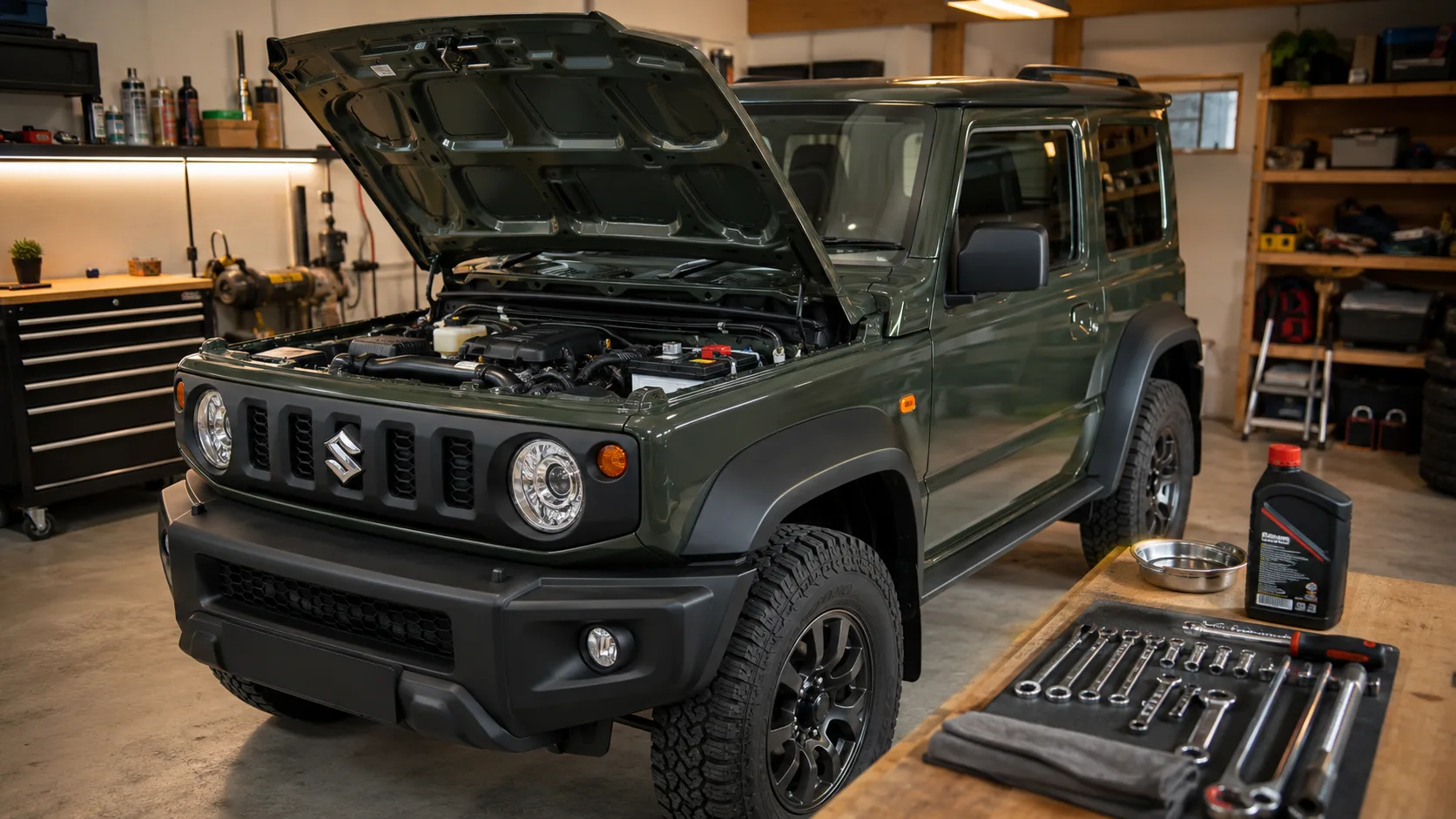
A well-maintained Jimny will outlast almost anything it encounters off-road. The K15B engine in the JB74 and the K13B in the JB23 are both engineered for high-mileage reliability — but only if you treat them to correct oils, correct intervals, and prompt attention when something changes. This guide covers everything.
JB74 Service Intervals — Official Schedule
Suzuki’s recommended service intervals for the JB74 in South Africa:
| Interval | Service Items | Approx. Dealer Cost |
|---|---|---|
| Every 15,000 km / 12 months | Engine oil + filter, tyre rotation, visual inspection, reset service indicator | R2,200–R3,500 |
| 30,000 km | 15k items + air filter inspect, brake inspect, all fluid levels | R2,800–R4,200 |
| 45,000 km | 15k items | R2,200–R3,500 |
| 60,000 km | Major: spark plugs, air filter replace, brake fluid, transmission fluid, transfer case fluid, axle diff fluid, cabin filter, coolant inspect | R5,500–R7,500 |
| 90,000 km | 15k items + brake fluid replace | R3,200–R4,500 |
| 120,000 km | As 60k + coolant replace, timing chain inspect | R7,000–R9,500 |
These are minimum intervals. If you trail regularly, drive in dusty conditions, or tow frequently, reduce oil change intervals to 10,000 km and inspect the air filter after every sandy outing.
The most expensive repair on any Jimny is the one that gets skipped at service time. A R250 oil change prevents a R25,000 engine rebuild.
Sarah Okafor, Compact Conqueror
Engine Oil — Specification and Selection
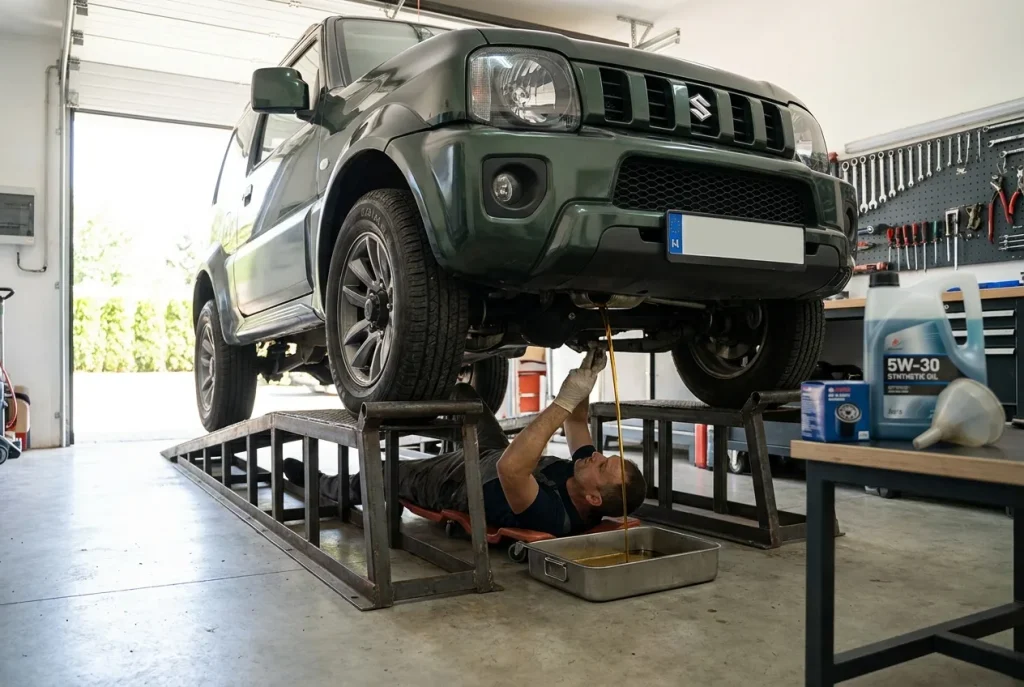
The K15B engine requires fully synthetic oil. Suzuki’s factory fill is a 5W-30 grade, and this remains the correct viscosity for standard use in South African conditions. In extreme summer heat or sustained off-road use (long crawling sessions that raise oil temperature), a 5W-40 full synthetic provides additional protection.
Recommended Oil Brands (South Africa)
- Mobil 1 5W-30: OEM-quality synthetic — premium choice and widely available
- Castrol EDGE 5W-30: Strong shear-strength performance — good for modified engines
- Shell Helix Ultra 5W-30: Excellent deposit control — recommended for high-mileage engines
- Total Quartz 9000 5W-30: Cost-effective full synthetic — solid everyday choice
Sump capacity for the K15B is 3.3 litres with filter change. Always check level with the dipstick after filling — overfilling causes as many problems as under-filling.
Transmission and Transfer Case Fluids
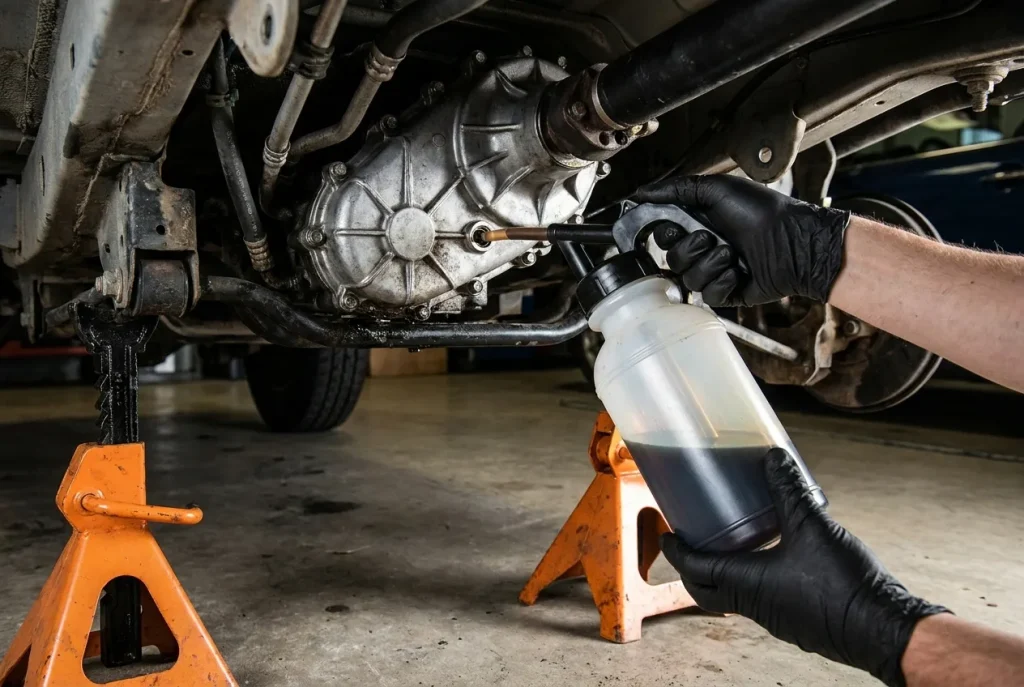
The JB74’s gearbox, transfer case, front differential, and rear differential each have separate fluid requirements. Mixing these up causes rapid component wear.
| Component | Fluid Type | Capacity | Change Interval |
|---|---|---|---|
| 5-speed Manual Gearbox | GL-4 75W-85 gear oil | 1.5 L | 60,000 km or 4 years |
| 4-speed Automatic Gearbox | ATF SP-III or Dexron III | 4.7 L (total) | 60,000 km or 4 years |
| Transfer Case (AllGrip Pro) | GL-4 75W-85 gear oil | 0.9 L | 60,000 km or 4 years |
| Front Differential | GL-5 75W-90 gear oil | 1.2 L | 60,000 km or 4 years |
| Rear Differential | GL-5 75W-90 gear oil | 1.4 L | 60,000 km or 4 years |
After trail use involving water crossings, drain and inspect all drivetrain fluids. Milky or discoloured oil indicates water ingress — do not run the vehicle further until the fluid is replaced and the source identified.
Brake System Maintenance
The Jimny’s brakes (ventilated discs front, drums rear on base models; discs all-round on some markets) cope well with moderate trail use. Key maintenance items:
Brake Fluid
DOT 3 or DOT 4 brake fluid — check Suzuki’s specification on your particular build. Replace every two years regardless of condition, as brake fluid absorbs moisture over time, lowering its boiling point. This is particularly important for owners who conduct descents with sustained brake application.
Brake Pads and Shoes
Inspect thickness at every service. Rear drum shoes wear more slowly but are harder to inspect — remove the drums and measure shoe material thickness annually if you trail regularly. Minimum safe thickness: 2 mm on pads, 1.5 mm on shoes.
Brake Lines
If you’ve lifted the car more than 40 mm, inspect brake line routing for stretching or chafing. Extended brake lines are required at lifts above 50 mm. Braided stainless lines are a worthwhile upgrade for any trail-focused build — they resist swelling under heat and provide a more progressive pedal feel.
Air Filter and Breathing System
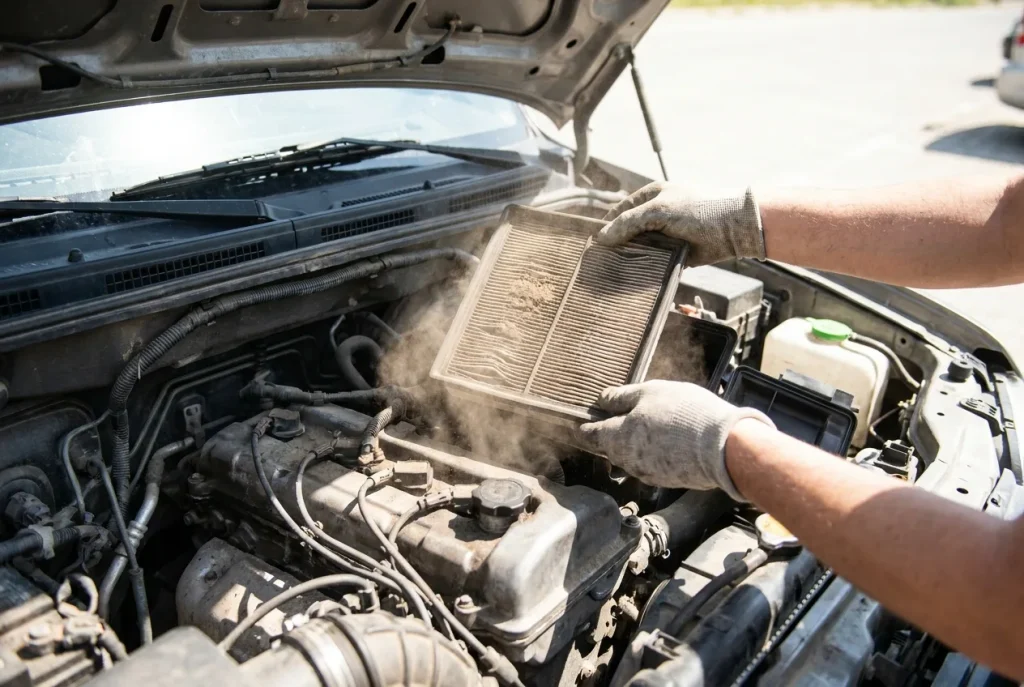
The JB74’s standard paper air filter requires inspection every 15,000 km and replacement at 30,000 km under normal conditions. In dusty environments — Karoo, Kalahari, Soutpansberg — inspect monthly and replace when contaminated.
Aftermarket Air Filters
High-flow cotton-gauze filters (K&N, Mann, Safari) can be cleaned and re-oiled rather than replaced. They flow marginally more air than paper elements, but the primary benefit is cost saving over high-mileage ownership. Avoid cheap oiled filters that can allow oil to contaminate the MAF sensor.
Snorkel Fitment Notes
If you’ve fitted a snorkel, ensure the pre-filter bowl is regularly emptied and the ram tube is positioned facing forward (not rearward). A rear-facing snorkel reduces aspiration efficiency and can cause reversion in certain throttle conditions. See your snorkel manufacturer’s installation instructions.
Cooling System
The K15B runs a pressurised coolant system. Check the coolant reservoir level at every fuel stop on trail trips — a slow leak will not be obvious until the engine overheats.
- Coolant type: Suzuki Genuine Coolant or a compatible full-organic inhibitor (OAT) coolant
- Concentration: 50/50 mix with distilled water (provides protection to -37°C and corrosion inhibition)
- Replace: every 120,000 km or 5 years
- Radiator cap: test at 120,000 km — a failing cap causes pressurisation loss and boiling at lower temperatures
Common JB23 Maintenance Notes
The older JB23 has a 20+ year production run and a well-documented maintenance pattern. Specific issues to know:
5th Gear Wear
JB23s with high mileage often exhibit 5th gear pop-out — the gear disengages under light load on the highway. This is a known issue caused by wear of the 5th gear synchroniser and locking ring. A gearbox rebuild or replacement resolves it. If buying a used JB23, test the 5th gear specifically at highway speed under light throttle.
Cam Chain Noise
A rattling noise on cold start that disappears after warm-up indicates cam chain wear or a failing tensioner. Address promptly — a snapped chain on the K13B causes significant engine damage. Replacement of the chain, tensioner, and guides at 120,000–150,000 km is preventative maintenance on any JB23.
Rust Prevention
JB23 sill panels and floor sections are notorious rust points. Treat all bare metal with a quality cavity wax (Waxoyl or Dinitrol) and inspect annually. The spare wheel carrier mounting point on the tailgate is another common rust origin — address any surface rust immediately before it penetrates the tailgate skin.
DIY Maintenance Tasks — JB74
Several maintenance tasks are well within the ability of a mechanically confident owner:
- Engine oil and filter change: Straightforward on the JB74. Oil drain plug (17 mm), filter accessible from below. Use a drain pan and torque the plug to 35 Nm.
- Air filter replacement: 4 clips on the airbox. 10 minutes. No tools required.
- Cabin air filter: Behind the glovebox, accessed by pressing the sides inward. 5 minutes.
- Battery replacement: Standard Group 55D23L battery (or equivalent). Disconnect negative first, reconnect last.
- Wiper blade replacement: Hook-type fitting. 5 minutes per blade.
- Tyre rotation: Rotate front-to-rear every 15,000 km. Include the spare in a 5-tyre rotation pattern every 30,000 km.
For all work involving the drivetrain, brakes, steering, or suspension, use a qualified workshop. The Jimny community has a good network of independent 4×4 specialists who understand the platform — check the Community hub for recommendations.
Frequently Asked Questions
What oil does the Suzuki Jimny JB74 take?
The JB74 K15B engine uses fully synthetic 5W-30 engine oil meeting ACEA A3/B4 or API SN/SP specification. Suzuki recommends Suzuki Genuine Oil, but any quality full synthetic in this grade from reputable brands (Mobil 1, Castrol EDGE, Shell Helix Ultra) is appropriate. Sump capacity is 3.3 litres with filter.
How often should I service my Jimny?
The JB74’s official interval is every 15,000 km or 12 months, whichever comes first. For trail users, dusty environments, or towing applications, reduce the oil change interval to 10,000 km. The 60,000 km major service (spark plugs, transmission fluids, brake fluid) is a firm milestone — don’t stretch it.
Can I service my Jimny myself?
Basic maintenance (oil change, air filter, cabin filter, wiper blades) is straightforward DIY work. Anything involving the braking system, suspension, drivetrain, or electrical systems should be handled by a qualified workshop — both for safety reasons and to protect your warranty claim history.
How long does a Suzuki Jimny engine last?
Both the K13B (JB23) and K15B (JB74) are highly durable engines. JB23s with 300,000+ km on the original engine are well-documented in the enthusiast community. The key factors are regular oil changes (don’t stretch intervals), prompt response to unusual noises, and correct coolant maintenance. A neglected oil system will kill the K15B just like any other engine.
What happens if I use the wrong gear oil in the Jimny’s differentials?
Front and rear differentials have different friction modifier requirements. Using GL-5 gear oil in a synchromesh gearbox designed for GL-4 can damage brass synchronisers. Using the wrong viscosity accelerates wear. Always consult the Suzuki service manual or a qualified mechanic before changing drivetrain fluids.
Does the Jimny need special brake fluid?
The JB74 uses DOT 4 brake fluid (confirm on your specific build’s service label). Never mix DOT specifications. Replace fully every two years — brake fluid is hygroscopic (absorbs moisture from the air) and its boiling point drops as water content increases, which can cause brake fade on sustained downhill descents.
Related Reading
Complete Buyer’s Guide 2026
New or used? This generation? The buyer’s guide answers every pre-purchase question.
First Jimny Mods: The Priority List
What to modify first — with budget breakdowns and SA market product comparisons.
Maintenance & DIY Hub
Full maintenance hub: DIY guides, service schedules, fluid specs, and workshop resources.
Free Newsletter
The Compact Conqueror Newsletter
Mod guides, trail reports, maintenance reminders and Jimny news — free, every week.
Free Jimny Tool
What will your Jimny really cost to own?
Fuel, insurance, tyres and servicing — get a realistic monthly and annual running-cost estimate in under a minute.