

The Suzuki Jimny and the Jeep Wrangler are often mentioned in the same breath — two of the few remaining body-on-frame, solid-axle, low-range 4x4s built for genuine off-road use. But comparing them directly is like comparing a terrier to a Great Dane. They share a philosophy and almost nothing else. Here is how they really stack up, and which one is right for you.
Two Very Different Animals
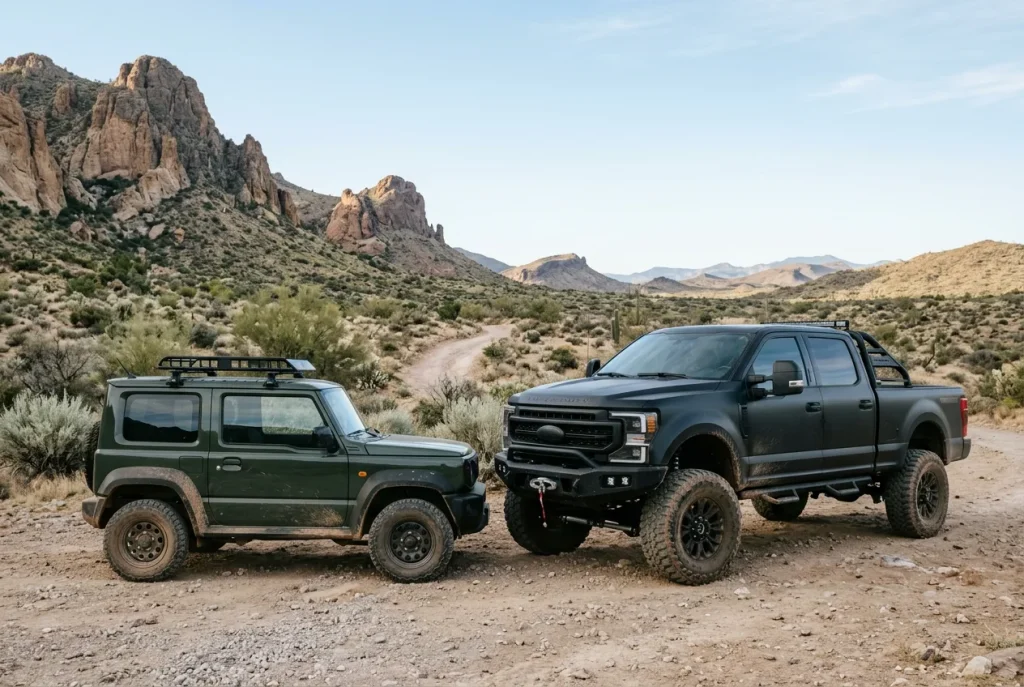
Both the Jimny and Wrangler are uncompromising off-roaders with separate ladder-frame chassis, rigid axles, and proper low-range 4WD. That shared DNA is why enthusiasts cross-shop them. But the similarities end at the philosophy. The Wrangler is large, powerful, expensive, and thirsty. The Jimny is tiny, modestly powered, affordable, and frugal. They solve the same problem at opposite ends of the scale.
| Specification | Suzuki Jimny (JB74) | Jeep Wrangler (typical) |
|---|---|---|
| Engine | 1.5L petrol, 75 kW | 2.0L turbo petrol, ~200+ kW |
| Length | ~3,645 mm (3-door) | ~4,880 mm (4-door) |
| Kerb weight | ~1,135 kg | ~2,000+ kg |
| Fuel consumption | ~6.8–7.5 L/100 km | ~11–14 L/100 km |
| Approx. price (SA new) | From R439,900 | From ~R1,100,000+ |
| Seats | 4 | 5 |
| 4WD | AllGrip Pro, low range | Command-Trac / Rock-Trac, low range |
| Lockers (factory) | None (aftermarket) | Available (Rubicon) |
| Ground clearance | 210 mm | ~240+ mm |
The Wrangler conquers terrain with power and size. The Jimny conquers it by being small enough to thread through, and light enough not to get stuck.
Compact Conqueror
Off-Road Capability
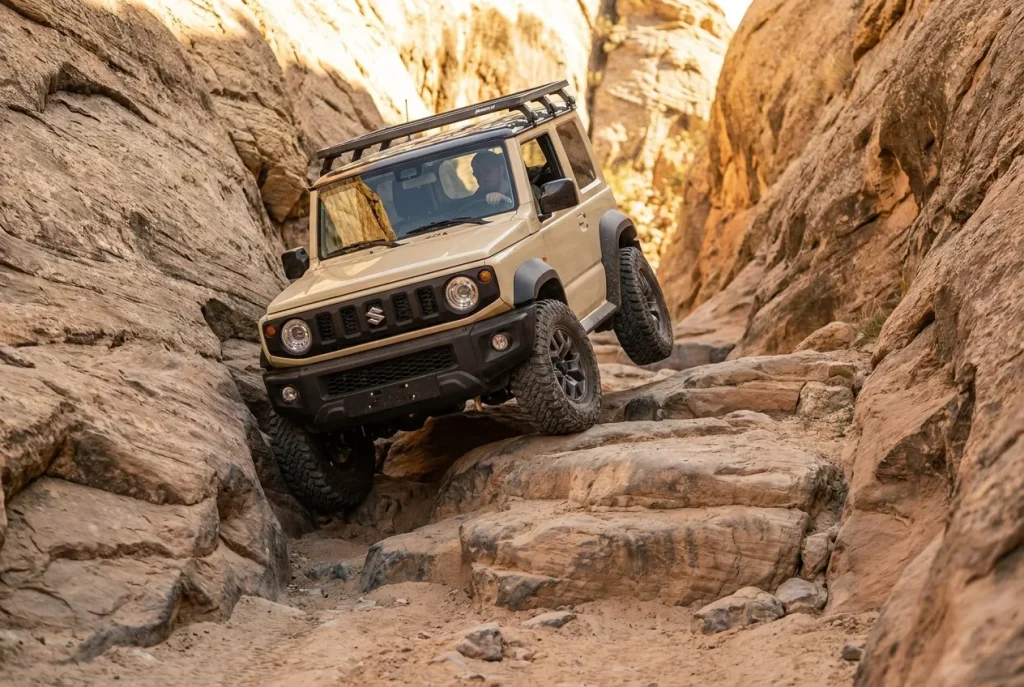
Both are genuinely capable, but they win in different conditions. The Wrangler’s power, available locking differentials (on the Rubicon), greater ground clearance, and longer-travel suspension make it formidable on big obstacles, deep ruts, and high-speed desert terrain. It simply has more of everything.
The Jimny’s advantage is the opposite: it is small and light. On tight, technical trails — narrow tracks, dense bush, rocky steps where a wide vehicle simply won’t fit — the Jimny goes places the Wrangler physically cannot. Its light weight means it floats over soft sand and mud that bogs heavier vehicles, and it is far easier to recover when it does get stuck. For a single driver on technical terrain, many would take the Jimny.
On-Road and Daily Use
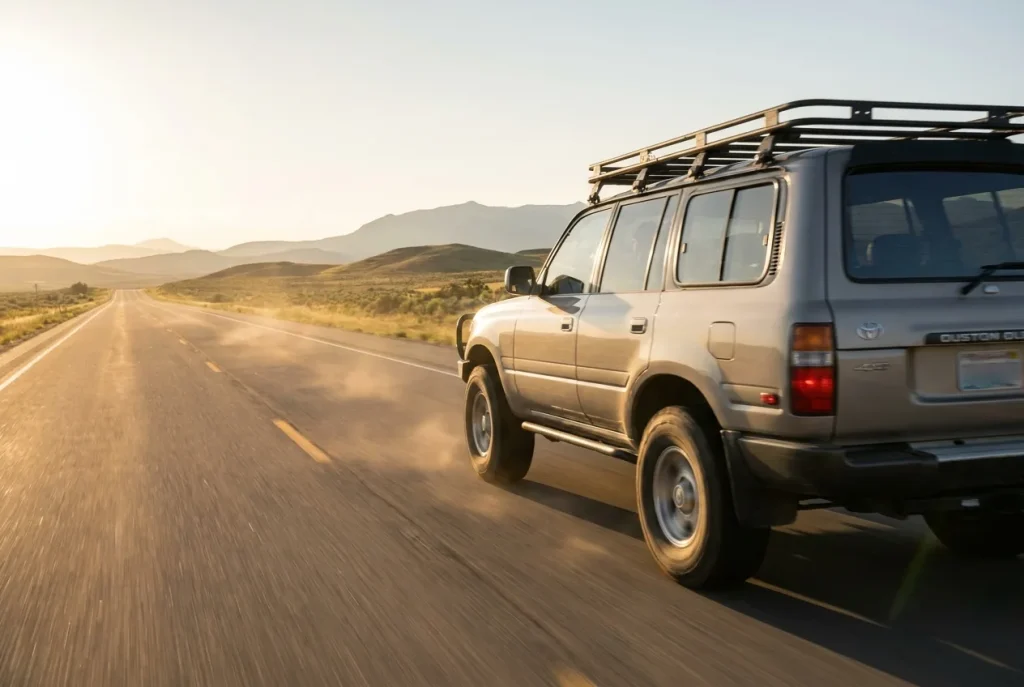
The Wrangler is the more comfortable highway cruiser — more power, a longer wheelbase, and a more settled ride at speed. It is also vastly more practical for families, with five seats, a large boot, and genuine space.
The Jimny wins on everything related to size. It parks anywhere, threads through traffic and tight city streets, and sips fuel. The trade-off is the modest 1.5-litre engine that works hard on highways and steep climbs, the small rear seat (in the 3-door), and a busy ride. For urban use and easy ownership, the Jimny is far less demanding.
Cost of Ownership
This is where the gap is widest. The Wrangler costs roughly three times as much to buy, drinks roughly twice the fuel, and costs considerably more to service, insure, and shoe with tyres. The Jimny’s affordability — both to buy and to run — is a core part of its appeal.
Add the Jimny’s exceptional resale value (see our resale guide) and the total-cost gap widens further. The Wrangler holds value reasonably well by large-SUV standards, but it cannot match the Jimny’s near-legendary depreciation resistance.
Which Should You Buy?
Choose the Suzuki Jimny if:
- You want genuine off-road capability on a sensible budget
- You value low running costs and exceptional resale value
- You drive tight, technical trails where a smaller vehicle is an advantage
- You want an easy-to-own daily vehicle that parks anywhere
- You’re a solo driver or couple, or the Jimny is a second vehicle
Choose the Jeep Wrangler if:
- You need five seats and family-sized practicality
- You want maximum power, ground clearance, and factory locking differentials
- You tackle big obstacles, deep ruts, or high-speed desert terrain
- You do significant highway mileage and want a comfortable cruiser
- Budget — both purchase and running — is not the primary concern
The Honest Verdict
These two rarely compete for the same buyer once the budgets are on the table. The Wrangler is a large, premium, powerful off-roader at a premium price. The Jimny is a tiny, affordable, characterful off-roader that punches astonishingly above its weight. If your heart says Wrangler but your budget says Jimny, the good news is that the Jimny will take you to most of the same places — and leave money in your pocket for the journey.
Frequently Asked Questions
Is the Suzuki Jimny as capable off-road as a Jeep Wrangler?
In different ways. The Wrangler has more power, greater ground clearance, available locking differentials, and longer suspension travel — making it superior on big obstacles and high-speed terrain. The Jimny’s advantage is its small size and light weight, letting it thread through tight, technical trails the Wrangler physically cannot fit, and float over soft sand that bogs heavier vehicles. For technical terrain, the Jimny is remarkably competitive despite costing a fraction as much.
How much cheaper is a Jimny than a Wrangler?
Substantially. In South Africa, a new Jimny starts from R439,900 (Suzuki Auto SA list price, October 2026) while a new Wrangler starts from roughly R1,100,000 or more — the Wrangler costs roughly two and a half times as much to buy. The Jimny also uses about half the fuel and costs considerably less to service, insure and re-tyre, making the running-cost gap just as significant.
Which is better for daily driving, the Jimny or Wrangler?
It depends on your needs. The Jimny is far easier in town — it parks anywhere, threads through traffic, and sips fuel — but has a modest engine and tight rear space. The Wrangler is a more comfortable highway cruiser with five seats and real family practicality, but it is large, thirsty and expensive. For urban and budget-conscious use, the Jimny; for family highway use, the Wrangler.
Does the Jimny or Wrangler hold its value better?
The Jimny, comfortably. It has near-legendary resale value, with used examples sometimes selling close to new prices in tight markets. The Wrangler holds value reasonably well for a large SUV, but cannot match the Jimny’s depreciation resistance, which is among the strongest of any mainstream vehicle.
Can the Jimny tow like a Wrangler?
No — this is a clear Wrangler advantage. The Jimny’s braked tow rating is 1,300 kg (350 kg unbraked), suitable for a light trailer or small boat; our Jimny towing guide explains what that means in practice. The Wrangler tows considerably more thanks to its larger engine and heavier construction. If regular or heavy towing is a requirement, the Wrangler (or a larger vehicle) is the appropriate choice.
Is the Jimny a good first off-road vehicle compared to the Wrangler?
Yes — arguably better for beginners. The Jimny’s small size, light weight and forgiving nature make it less intimidating on the trail and far easier to recover when stuck. It is also much cheaper to buy and run, so the cost of learning (and the occasional scrape) is lower. The Wrangler is more capable at the limit but larger, more expensive, and more demanding to place precisely on technical terrain.
Related Reading
Complete Buyer’s Guide 2026
Everything about choosing and buying a Jimny across all generations.
Running Costs Breakdown
The full ownership-cost picture that makes the Jimny so affordable.
Resale Value Guide
Why the Jimny’s value retention beats almost everything, Wrangler included.
Free Newsletter
The Compact Conqueror Newsletter
Buying tips, mod guides, trail reports and Jimny news — free, every week.
Free Jimny Tool
Not sure which Jimny to buy?
Compare the Samurai, JB23, JB43 and JB74 side by side — engines, dimensions, kit and what changed between generations.